


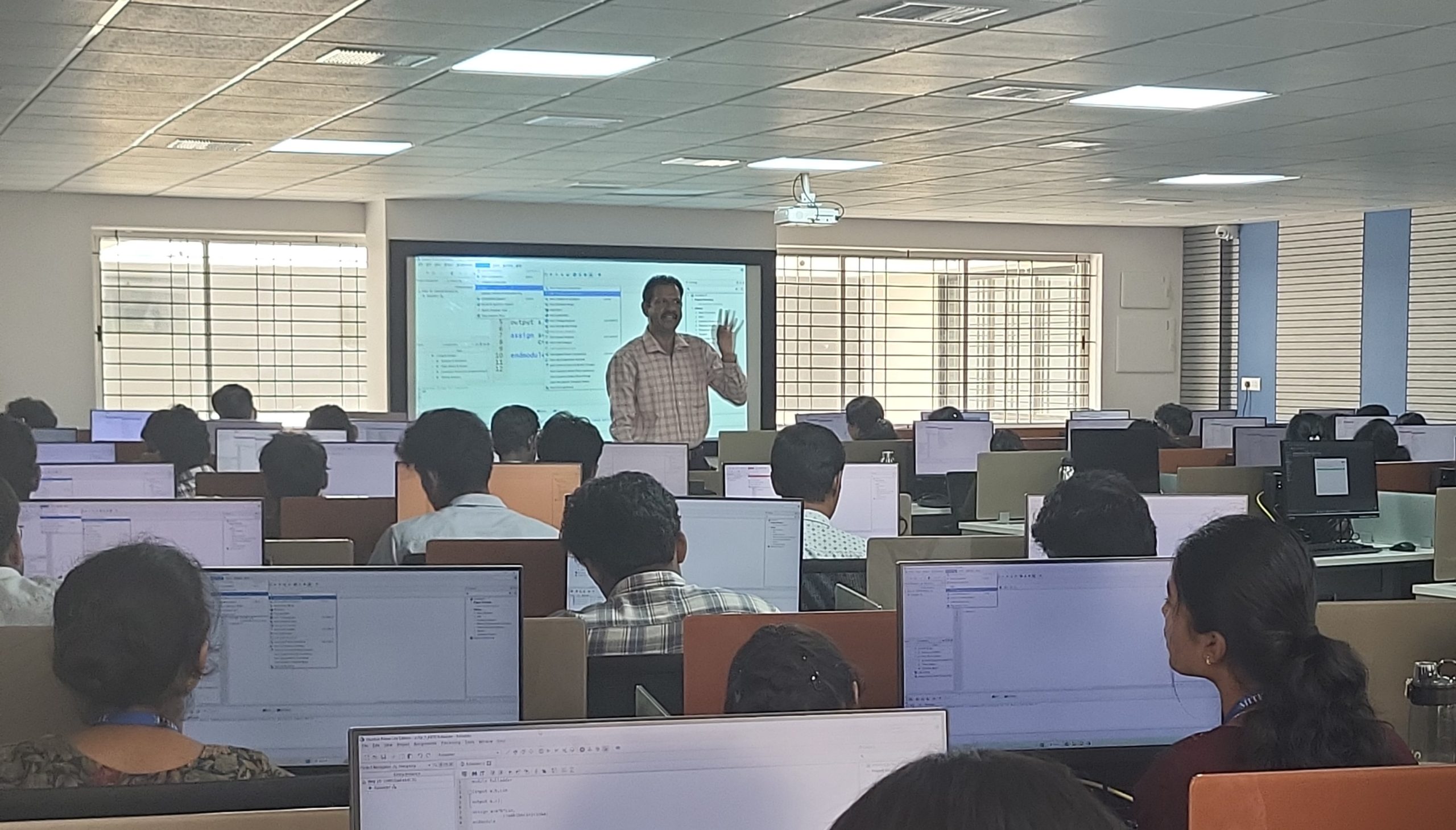
 The Department of Electronics & Communication Engineering, Mangalore Institute of Technology & Engineering, organized a two-day workshop on “Innovative Digital System Design: Leveraging FPGA Technology and Nios V for Next-Generation” on 12th and 13th March 2026 from 9:00 AM to 4:30 PM. The workshop aimed to provide students with both theoretical knowledge and practical exposure to modern digital system design using FPGA technology. A total of 132 students and 2 faculty members actively participated in the program, making it a highly engaging and skill-oriented learning experience.
The resource person for the workshop was Mr. Padmanaban K, Software Enabling and Optimization Engineer at Altera Semiconductor Technology India Pvt. Ltd., Bengaluru. With over 20 years of experience in FPGA and ASIC design, he brought a rich blend of industry expertise and academic experience. During the sessions, he introduced participants to the fundamentals of Field Programmable Gate Arrays (FPGAs), explaining their importance, applications, and advantages in modern digital system design. He also elaborated on FPGA architecture, covering components such as Look-Up Tables (LUTs), Adaptive Logic Modules (ALMs), Logic Array Blocks (LABs), memory blocks, and DSP blocks, along with the FPGA design flow.
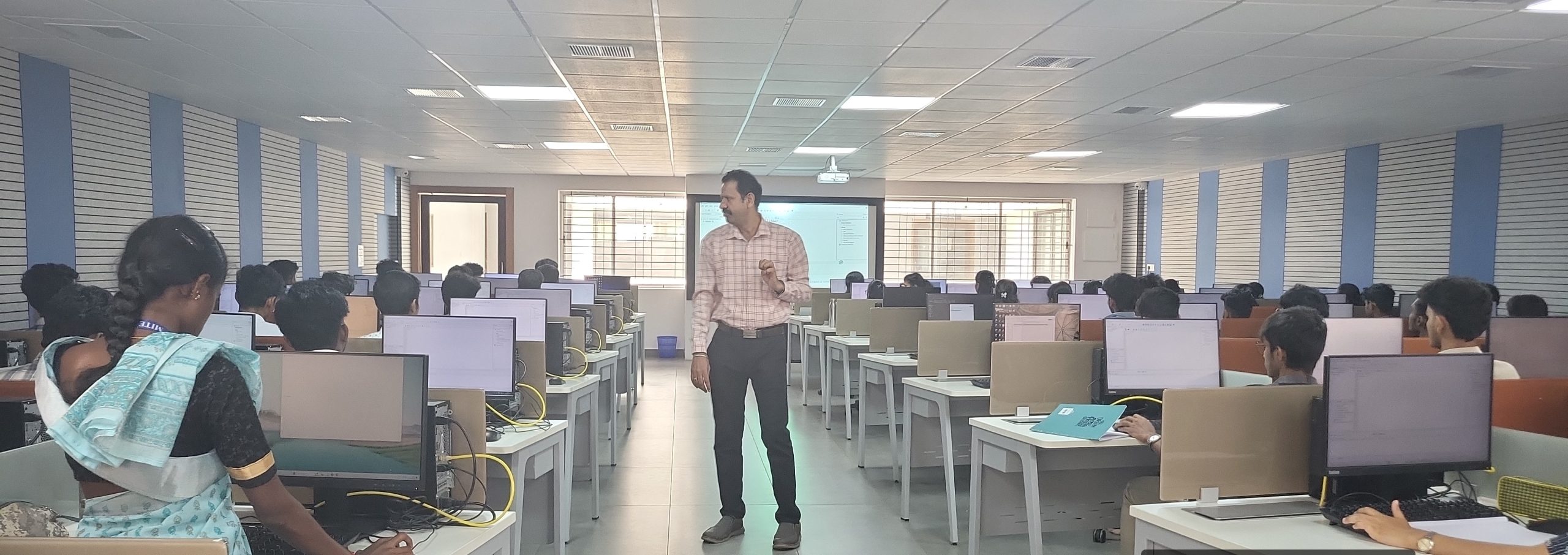 The workshop included hands-on training using Quartus® Prime Design Software, where students learnt key steps such as project creation, design entry, synthesis, pin assignment, and place-and-route processes. The session also covered system integration using Platform Designer and introduced the Nios® V soft-core processor, focusing on its features and development flow. Through practical demonstrations and laboratory exercises, participants gained valuable exposure to FPGA-based system design and implementation. The workshop significantly enhanced students’ understanding of both theoretical and practical aspects of FPGA technology.
The event was coordinated by Dr. Vinayambika S. Bhat, Mr. Avinash N J, and Ms. Poornima K, and concluded successfully with active participation from students. The workshop proved to be highly informative and beneficial, equipping participants with essential skills relevant to advanced digital design and VLSI domains.