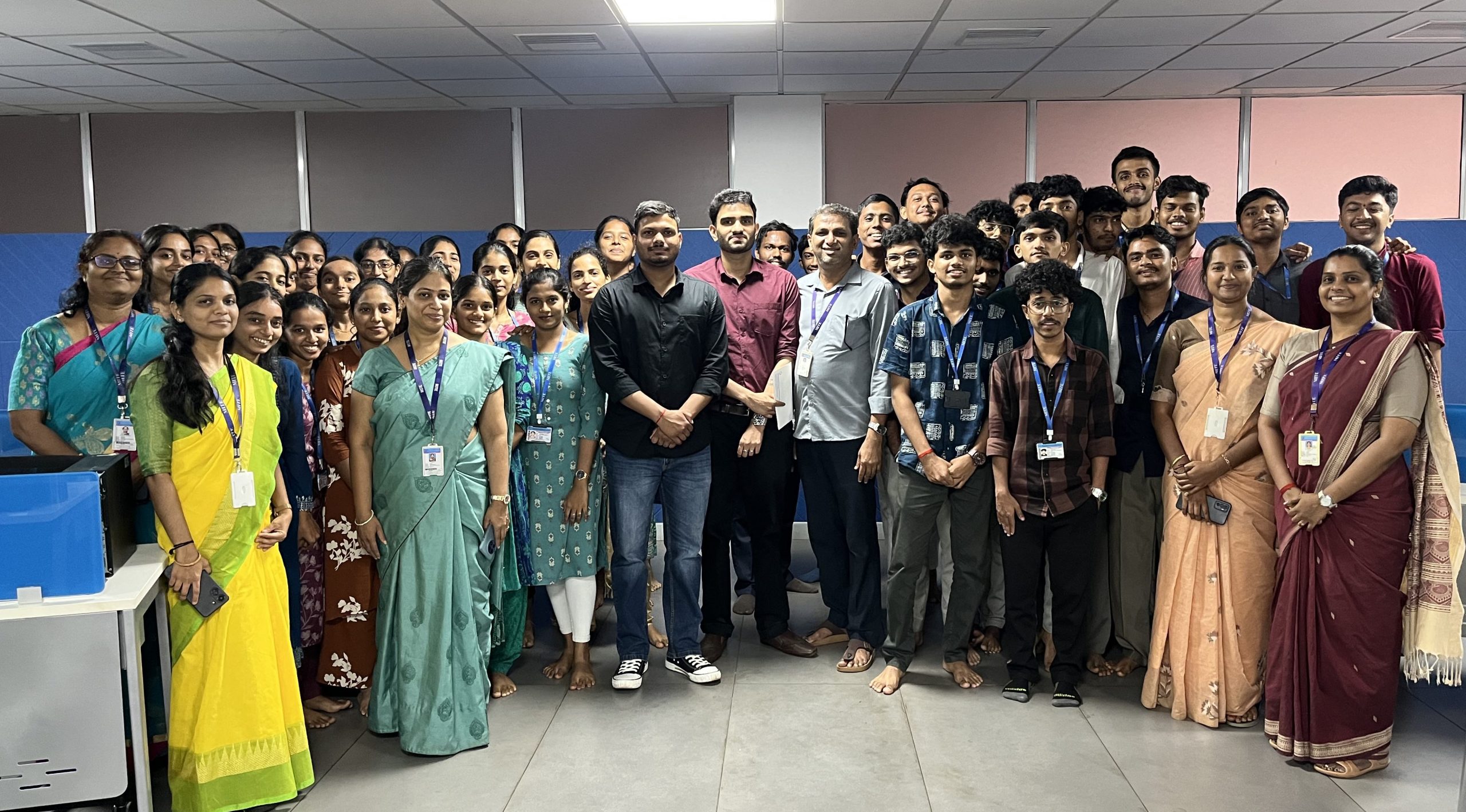
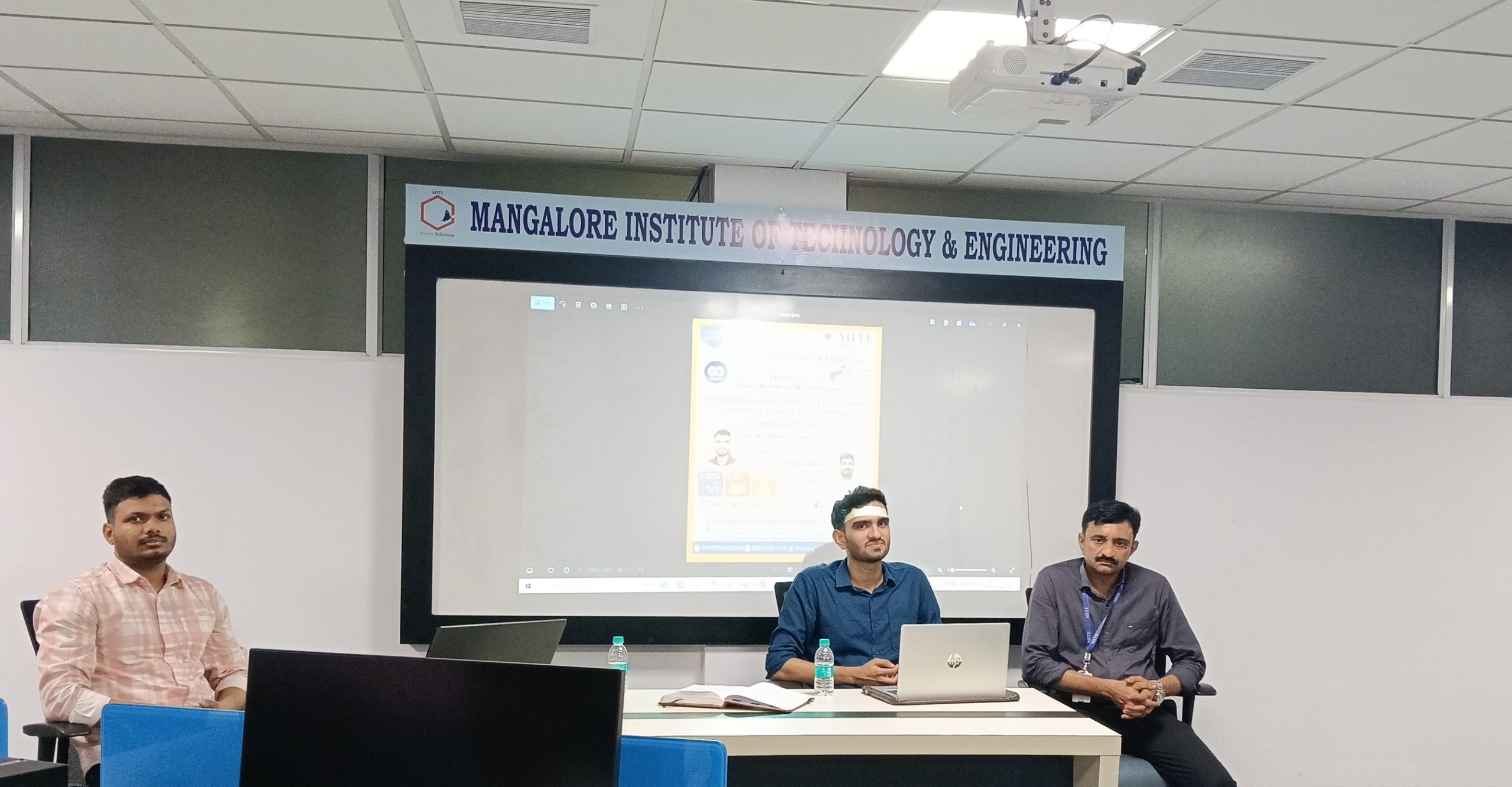
 The Department of Computer Science & Engineering, Mangalore Institute of Technology & Engineering, organized a two-day workshop on “AI in Healthcare Data Analytics: From Machine Learning to Research Paper Drafting” on 26th and 27th May 2026. The workshop was designed to provide students with comprehensive exposure to Artificial Intelligence, Machine Learning, and research methodologies in the context of healthcare analytics. A total of 49 fourth-semester students actively participated in the program, making it an engaging platform for learning emerging technologies and research practices in intelligent healthcare systems.
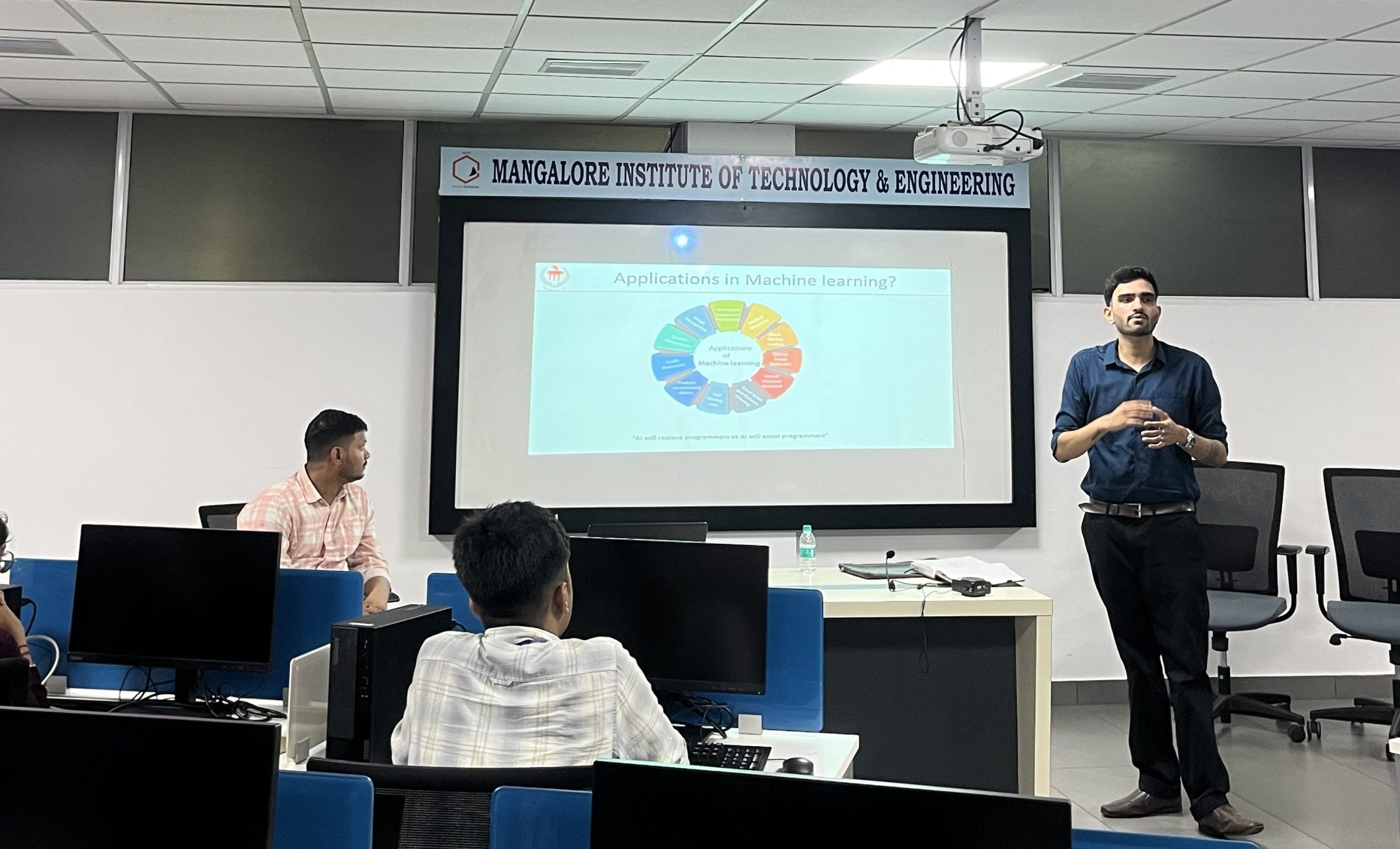 The workshop was conducted by Dr. Krishnaraj Chadaga, Assistant Professor, Manipal Institute of Technology, Manipal, and Mr. Rahul Yadav, Dr. TMA Pai Research Scholar, MIT Manipal. Dr. Chadaga is a distinguished academician and researcher specializing in Artificial Intelligence, Machine Learning, Explainable AI (XAI), medical data analytics, and intelligent healthcare systems. He has made significant contributions to AI-driven healthcare solutions, including cancer detection, thermographic analysis, biomarker analytics, bone marrow transplant outcome prediction, and disease prediction systems. With over 50 high-quality Q1 journal publications and several international conference presentations, he has actively contributed to advancing AI-based clinical decision support systems. Mr. Rahul Yadav’s research focuses on Machine Learning, Explainable AI, and healthcare analytics, with emphasis on developing interpretable AI models for biomedical and clinical applications, including predictive healthcare systems and disease detection frameworks.
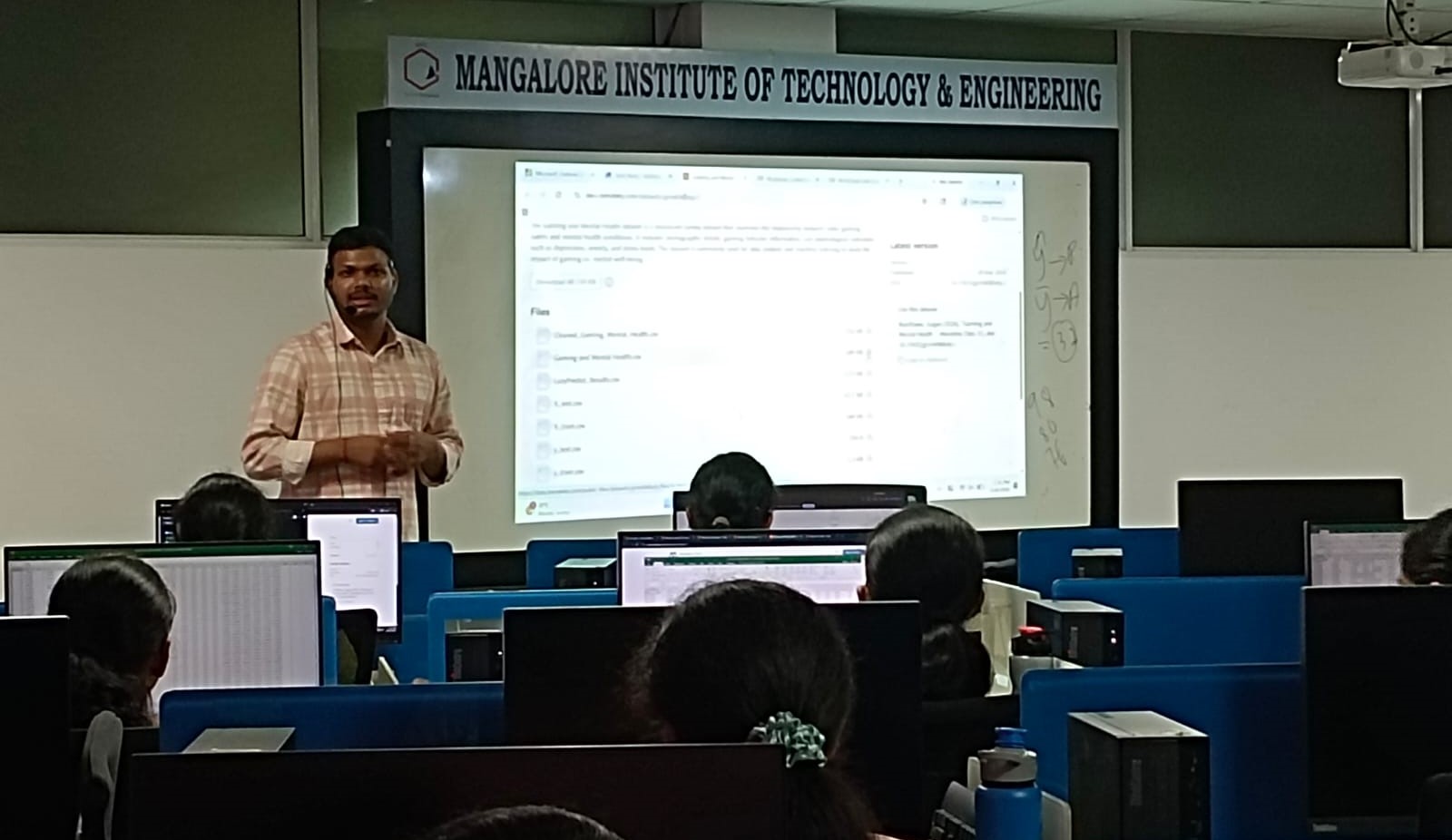 During the workshop, participants were introduced to the complete workflow of healthcare data analytics, beginning with healthcare data preprocessing, visualization, and machine learning model development. Through practical demonstrations and hands-on activities, students gained exposure to AI tools and frameworks used for analysing healthcare datasets and building predictive models. The sessions also focused on research methodology, citation and reference management tools, publication ethics, and the process of drafting and publishing quality research papers. Real-world healthcare applications and case studies helped students understand how AI can be leveraged to address complex clinical and biomedical challenges while emphasizing the importance of ethical and responsible research practices.
The event was coordinated by Dr. Sumalatha U and Ms. Sunitha N V, Assistant Professors, Department of Computer Science & Engineering, MITE. The workshop concluded successfully with enthusiastic participation and active interaction from students. Overall, the program served as an effective platform for experiential learning, fostering technical competence, research aptitude, innovation, and industry readiness while encouraging participants to explore AI-driven solutions in healthcare and biomedical domains.